How to Install Commercial EV Chargers: A Step-by-Step Guide
Is Your Property a Good Fit for EV Charging?
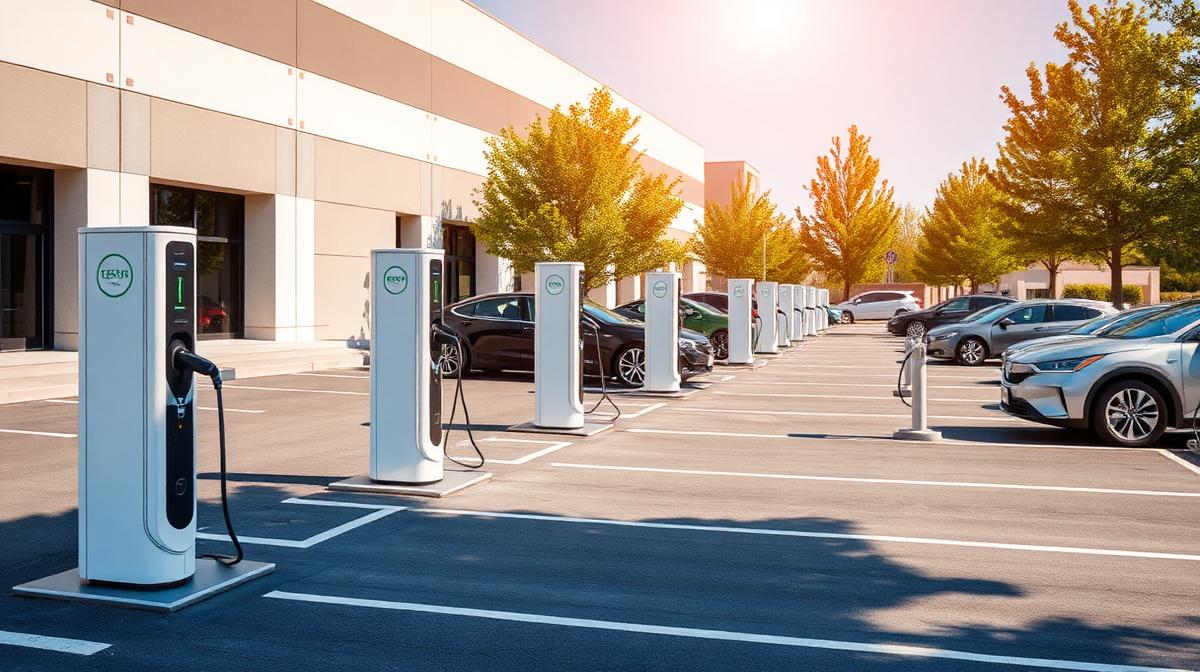
Before diving into the installation process, it's worth understanding what makes a property ideal for commercial EV charging. The best candidates typically have:
- Adequate parking with at least a few dedicated spaces available
- Proximity to electrical infrastructure (transformer, main panel)
- Dwell time — locations where people spend 20+ minutes (restaurants, retail, offices, hotels)
- Visibility from the road for drive-by EV traffic
- Strong local EV adoption or growing EV registrations in your area
Even if you're unsure, a free site assessment can quickly determine if your property is a good candidate.
Step 1: Site Assessment
The first step is a professional evaluation of your property. During a site assessment, experts will review:
- Electrical capacity — Does your building have enough power, or will upgrades be needed?
- Parking layout — Where should chargers be placed for maximum visibility and convenience?
- Utility interconnection — What's the process for connecting to your local utility?
- Incentive eligibility — Which grants and tax credits apply to your specific location?
- Revenue potential — Based on local EV adoption data and traffic patterns
This assessment is typically provided free of charge by reputable EV charging companies.
Step 2: Design & Engineering
Once the site assessment is complete, the engineering team will create a detailed design that includes:
- Charger placement and quantity
- Electrical one-line diagrams
- Trenching and conduit routing
- ADA compliance considerations
- Signage and wayfinding plans
The design phase ensures that installation goes smoothly and meets all local building codes.
Step 3: Permitting
Your installation partner handles the permitting process, which includes:
- Building permits from the local jurisdiction
- Electrical permits
- Utility interconnection applications
- Any special permits required by your municipality
Permitting timelines vary by location but typically take 2-6 weeks.
Step 4: Construction & Installation
The actual installation process includes:
- Trenching and conduit — Running electrical infrastructure from your panel to the charger locations
- Electrical upgrades — If needed, upgrading your panel, transformer, or service
- Charger mounting — Installing the charging units on pedestals, walls, or bollards
- Networking setup — Connecting chargers to the internet for payment processing and monitoring
- Striping and signage — Marking EV-only parking spaces and installing directional signage
Most installations are completed in 1-3 weeks of active construction, depending on complexity.
Step 5: Commissioning & Activation
Before going live, each charger is tested to ensure:
- Proper power delivery at the rated output
- Payment processing works correctly
- Network connectivity is stable
- All safety features function properly
Once commissioned, your chargers appear on popular EV maps and apps, driving traffic to your location from day one.
Ready to Get Started?
The entire process from assessment to activation typically takes 8-16 weeks. The sooner you start, the sooner you'll be generating revenue and taking advantage of current incentive programs.
Request your free site assessment today — enter your property address on our homepage.